Super El Niño and Philippine Agriculture: What Small Farmers, Retailers, and Businesses Must Do to Survive—and Thrive | By Negosentro Media | Agriculture, Business, and Economic Outlook
Introduction: A Climate Threat That Could Reach Every Filipino’s Pocket
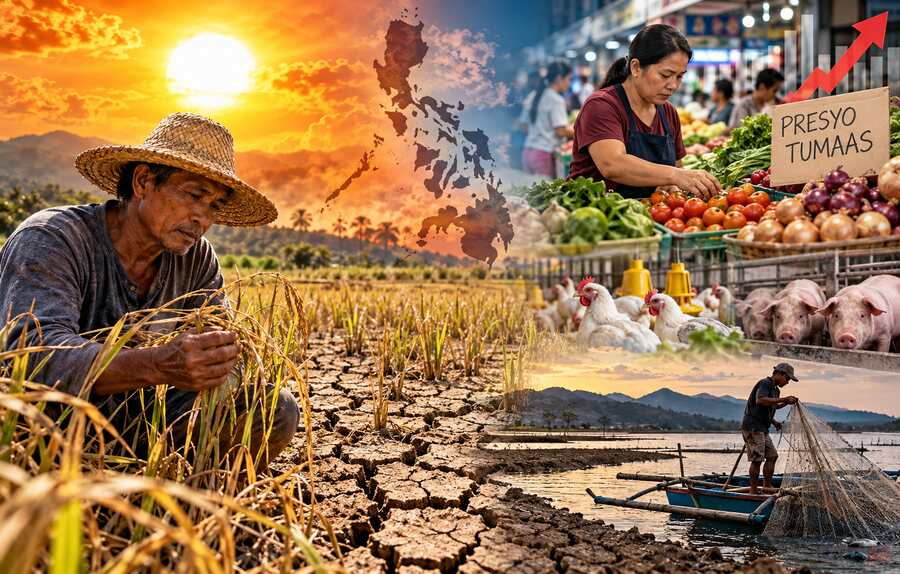
The Philippines is bracing for a potentially severe agricultural challenge as El Niño intensifies, threatening crop production, livestock, fisheries, food supply chains, and the livelihoods of millions of Filipinos.
According to the Philippine Atmospheric, Geophysical and Astronomical Services Administration (PAGASA), a strong El Niño is expected to intensify into a Very Strong El Niño between September and December 2026 and persist through the first half of 2027. This raises the risk of below-normal rainfall, prolonged dry spells, drought, and water shortages in vulnerable parts of the country. However, rainfall patterns will vary by region, and El Niño does not mean that every province will experience the same conditions. Source: PAGASA’s September 23, 2026 climate advisory.
The consequences are already becoming tangible. On October 14, 2026, the Philippine News Agency reported that the National Disaster Risk Reduction and Management Council (NDRRMC) had placed estimated agricultural damage from the ongoing El Niño at nearly ₱6.5 billion across 10 regions. Cagayan Valley accounted for the largest reported share, followed by the Cordillera Administrative Region and Davao Region. Source: Philippine News Agency.
For small farmers, this is more than a weather problem. It is a threat to household income, working capital, food security, loan repayments, and the ability to plant again after a failed harvest.
For retailers, wholesalers, food manufacturers, restaurants, and market vendors, the challenge is equally serious: rising procurement costs, unpredictable supply, price-sensitive customers, and the risk of spoiled inventory.
Yet the approaching crisis also presents an opportunity to rethink how Philippine agriculture operates. Farmers, businesses, cooperatives, and local governments can reduce losses through early preparation, water conservation, climate-smart farming, smarter procurement, and new products and services designed for a hotter, drier environment.
The key is to act before shortages become severe and before emergency measures become the only available option.
1. How Super El Niño Could Affect Philippine Agriculture
Rice and corn: The first line of concern
Rice and corn are especially vulnerable when rainfall declines during critical stages of crop development. Rainfed farms and upland production areas face significant exposure because they depend heavily on natural rainfall. Prolonged dry conditions during planting, flowering, and grain filling can reduce yields or cause total crop failure.
Irrigated farms are not automatically protected. When reservoirs, rivers, and irrigation systems have insufficient water, farmers may face restricted irrigation schedules, delayed planting, or pressure to harvest early.
Corn losses can also have consequences beyond the farm. Corn is a major feed ingredient for poultry and livestock, so reduced domestic production may contribute to higher feed costs. Those increases can eventually affect the prices of eggs, chicken, pork, and other animal products.
What this means: Farmers need to make planting decisions based on local rainfall forecasts and actual water availability—not simply follow the usual agricultural calendar.
Where agronomically appropriate, farmers can explore short-duration rice varieties, drought-tolerant corn, adjusted planting schedules, and alternative crops that require less water. They should seek advice from municipal agriculture offices and agricultural extension workers before changing varieties or abandoning established cropping systems.
Vegetables, onions, and fruit crops: Higher costs and unstable harvests
High-value crops may offer better returns per hectare, but many vegetables and fruit crops are sensitive to heat and water stress. Drought can reduce fruit size, cause flower drop, delay maturity, and lower the quality of marketable produce.
Small growers may also encounter higher costs for irrigation, pumping, mulching, pest management, and hired labor. Heat and plant stress can change pest and disease pressures, although the effects differ by crop and location.
When several producing areas experience lower yields at the same time, local markets may face tighter supplies and higher prices. Retailers and consumers can feel these effects quickly because fresh vegetables and fruits have limited shelf lives and cannot always be sourced economically from distant farms.
Farmers should prioritize crops suited to their local climate and available water. Practical measures include mulching, drip irrigation where affordable, shade netting for suitable crops, rainwater storage, and staggered planting to avoid having an entire harvest exposed to one period of extreme heat.
Livestock and poultry: Heat stress becomes a financial problem
High temperatures can reduce feed intake, slow growth, impair reproduction, and lower milk and egg production. In severe conditions, heat stress can increase mortality, particularly where ventilation, cooling, and drinking-water supplies are inadequate.
Poultry and piggery operators may face higher electricity and water bills as they try to maintain suitable housing conditions. If corn and other feed ingredients become more expensive, production margins can narrow further.
Small livestock raisers should ensure continuous access to clean drinking water, maintain ventilation, provide shade, avoid unnecessary handling during the hottest hours, and monitor animals for signs of heat stress. Any changes in feeding, housing, or cooling practices should be appropriate for the species and farm conditions.
Feed purchasing also deserves attention. Cooperatives and small producers may be able to negotiate better terms through consolidated purchasing, provided that storage is dry, secure, and sufficient to prevent spoilage.
Fisheries and aquaculture: Water quality can deteriorate rapidly
Fish ponds, freshwater cages, and other aquaculture operations may be affected by lower water levels, warmer water, and declining dissolved oxygen. These conditions can slow growth, increase disease risks, and trigger fish kills.
Small tilapia and milkfish growers should monitor water temperature, dissolved oxygen, water depth, fish behavior, and feeding response. Aeration may help where technically feasible, but it requires reliable equipment, electricity or fuel, and an appropriate emergency plan.
Farmers should avoid overstocking, excessive feeding, and releasing additional fingerlings when water conditions cannot support them. They should also consult fisheries technicians before making stocking or harvesting decisions.
For coastal and marine fisheries, El Niño’s effects can differ by location and species. Fishers should follow local fisheries advisories and avoid assuming that every fishing ground will experience the same change in catch.
2. Why Small Farmers Face the Greatest Risk
Smallholder farmers often have fewer financial reserves than larger agricultural businesses. Many operate on narrow margins, depend on a single harvest for their annual income, and have limited access to irrigation, credit, crop insurance, mechanization, and reliable market information.
A failed crop can trigger a damaging cycle:
- The farmer loses the expected harvest and income.
- Money intended for household expenses and loan payments disappears.
- The farmer borrows to buy seeds, fertilizer, fuel, and other inputs.
- The next planting season begins with greater debt and fewer resources.
- Another drought can deepen the financial crisis.
The Food and Agriculture Organization of the United Nations (FAO) has documented how drought-related crop losses can force Filipino farming households to borrow for the next planting season, threatening both livelihoods and food security. Its experience in supporting anticipatory action in Mindanao illustrates why assistance before a drought becomes severe can be more effective than responding only after losses occur.
Useful source: FAO — Anticipating crises to support farming communities in the Philippines.
This makes early intervention essential. The goal should not merely be to replace damaged crops, but to prevent avoidable losses, protect household cash flow, and preserve the farmer’s ability to produce again.
3. Practical Interventions: What Farmers Can Do Now
The best response to El Niño is not a single technology or subsidy. It is a combination of water management, appropriate crop selection, financial protection, and better coordination with buyers.
A. Protect water before it becomes scarce
Water conservation should be the first priority for farms that are likely to experience dry conditions.
Practical interventions include:
- Harvest rainwater. Collect and store rainwater in suitable tanks, farm reservoirs, or small water impounding structures, subject to local regulations and safe engineering practices.
- Improve irrigation efficiency. Consider drip irrigation for suitable vegetable crops and alternate wetting and drying (AWD) for appropriate irrigated rice fields.
- Repair leaks and canals. Reduce losses from damaged pipes, poorly maintained irrigation channels, and leaking ponds.
- Coordinate water schedules. Farmer associations should work with irrigation managers and neighboring farms to distribute limited water fairly.
- Explore solar-powered pumps. Where groundwater or surface water is legally and sustainably available, solar-powered irrigation may reduce dependence on fuel and grid electricity.
The Department of Agriculture has previously promoted rainwater harvesting, improved irrigation systems, and AWD as water-management measures. Its 2026 preparedness plan also includes assessing irrigation systems, mapping climate risks, and prepositioning drought-tolerant seeds and other agricultural inputs.
Useful sources: DA water-management strategies and DA’s 2026 El Niño preparedness plan.
B. Rethink the planting calendar
Farmers should avoid making planting decisions solely because a particular month is traditionally considered the start of the season.
Instead, they should consult PAGASA’s local climate outlooks and their municipal agriculture offices. Planting should take into account expected rainfall, soil moisture, irrigation availability, crop maturity periods, and market demand.
Depending on local conditions, alternatives may include drought-tolerant or early-maturing rice and corn varieties, mung beans, peanuts, soybeans, and selected root crops. These are not universal substitutes: farmers must assess soil suitability, seed availability, buyer demand, and water requirements before switching.
Diversifying crops can reduce the risk of losing an entire farm’s income to one weather event. However, diversification is most effective when farmers have identified buyers and realistic production costs before planting.
C. Insure the farm and protect working capital
Small farmers should investigate coverage available through the Philippine Crop Insurance Corporation (PCIC), including applicable crop, livestock, and fisheries insurance programs.
They should clarify eligibility, covered risks, exclusions, deadlines, and documentary requirements before purchasing coverage. Insurance does not necessarily cover every type of loss or compensate for every peso of expected income.
Farmers should also maintain basic records of planting dates, input purchases, farm expenses, crop conditions, and harvests. Photographs, receipts, and other evidence can help with reporting losses and making insurance claims.
Where possible, reserve some working capital for the next planting season rather than committing every peso to household spending or farm expansion. Avoid taking high-interest loans to finance a crop without first assessing the water outlook and likely selling price.
D. Work together through cooperatives
Small farms can gain bargaining power by purchasing seeds, fertilizer, feed, and equipment collectively. Cooperatives may also coordinate machinery rental, shared water storage, transport, cold storage, and marketing.
Collective selling can help farmers negotiate with wholesalers, supermarkets, institutional buyers, and food processors. Direct-to-consumer channels can reduce the number of intermediaries, although transport, packaging, and marketing expenses must still be considered.
The government’s KADIWA ng Pangulo program is one possible channel for participating farmers and cooperatives to reach consumers. Farmers should contact their local DA or LGU offices for current participation requirements and available schedules.
4. What Food Retailers, Wholesalers, and Market Vendors Should Do
El Niño’s effects will not stop at the farm gate. Small retailers may face a difficult combination of rising wholesale prices, inconsistent deliveries, shrinking customer budgets, and greater spoilage risk.
The answer is to improve purchasing, inventory management, product selection, and customer communication before supply disruptions become acute.
A. Diversify suppliers and sourcing locations
Retailers should avoid relying on a single farm, wholesaler, or producing region for essential goods.
A vegetable retailer, for example, can identify alternative suppliers in different agricultural areas, subject to transport costs, product quality, and actual supply availability. A restaurant or small grocery can qualify secondary suppliers for rice, eggs, meat, and vegetables.
Diversification should not mean buying from every available supplier. Businesses should check product quality, delivery reliability, payment terms, and traceability.
Retailers can also work directly with farmer groups to arrange recurring deliveries. Agreements should allow for reasonable adjustments when weather disrupts production rather than imposing unrealistic volumes on small farmers.
B. Manage inventory more intelligently
Perishable products require special attention during hot weather.
Retailers should review sales and spoilage data, order more frequently when practical, improve refrigeration and ventilation, and use first-in, first-out inventory practices. They should not overstock fresh goods simply because they fear prices will rise.
For products with longer shelf lives, businesses may maintain carefully calculated safety stocks if storage conditions, cash flow, and product turnover justify the cost.
Food safety must remain a priority. Refrigeration failures, prolonged exposure to heat, and unsafe handling can turn a supply problem into a health risk.
C. Offer affordable alternatives without compromising quality
As household budgets tighten, retailers can offer different package sizes and price points.
Examples include smaller rice packages, mixed vegetable bundles, seasonal produce, affordable protein alternatives, and value meals that use ingredients with dependable local supply.
Retailers can also develop practical promotions around seasonal crops, helping customers discover alternatives when certain vegetables or fruits become expensive.
The objective is not to encourage panic buying or exploit shortages. Transparent pricing and reliable availability can help businesses retain customer trust while supporting their communities.
D. Prepare for higher operating expenses
Higher temperatures and changing supply routes can increase electricity, water, fuel, and delivery costs.
Retailers should inspect refrigeration equipment, improve store insulation where feasible, maintain cold-chain equipment, optimize delivery routes, and consolidate purchases when doing so does not compromise freshness.
Businesses should also prepare simple contingency budgets that model different levels of increases in procurement and logistics costs. These estimates need not predict the exact price of every commodity; their purpose is to show how much additional working capital might be required if margins narrow.
5. Business Opportunities: Turning Climate Risk Into Resilient Enterprise
A severe El Niño can create legitimate business opportunities for enterprises that help farmers, food businesses, and communities adapt. The strongest opportunities solve a real problem and deliver measurable value rather than relying on speculation about shortages.
Opportunity 1: Affordable irrigation and water-saving equipment
Small farms need practical, accessible solutions such as drip-irrigation kits, storage tanks, hoses, water filters, moisture-monitoring tools, and solar-powered pumping systems.
Hardware stores, agricultural supply shops, equipment distributors, and local installers could develop packages designed for small plots rather than focusing exclusively on large commercial farms.
A business could offer installation, maintenance, and financing referrals in addition to selling equipment. Demonstration plots can help farmers assess whether the investment makes economic sense.
The key is to size systems properly and ensure that the water source is sustainable. A more efficient pump cannot solve the problem of a depleted water source.
Opportunity 2: Drought-tolerant seeds and farm inputs
Agricultural suppliers can expand access to suitable early-maturing seeds, drought-tolerant varieties, mulching materials, organic soil amendments, and water-efficient growing systems.
However, seed sellers should provide accurate information on crop suitability, maturity, water needs, and expected performance. Farmers should not be promised guaranteed yields during extreme weather.
Suppliers that build relationships with agricultural technicians, cooperatives, and local governments may be better positioned to serve smallholders consistently.
Opportunity 3: Solar-powered agricultural services
Solar-powered irrigation, aeration, and other farm applications may become attractive where electricity or fuel costs are high and the underlying water supply is reliable.
Rather than requiring every farmer to purchase an entire system, entrepreneurs could explore shared-equipment arrangements, rental services, or pay-per-use models through cooperatives.
The commercial challenge is to balance affordable service fees with equipment maintenance, financing costs, repairs, and seasonal demand.
Opportunity 4: Climate-smart farming advisory services
There is room for practical services that translate weather information into farm decisions.
Agricultural cooperatives, technology startups, and local service providers could offer localized planting alerts, crop calendars, irrigation reminders, pest monitoring, and market updates through SMS, messaging apps, or community meetings.
These services should use reliable sources such as PAGASA and official agricultural advisories. They should communicate uncertainty clearly rather than claiming to predict exact rainfall or guarantee a harvest.
For small farmers with limited internet access, simple Filipino-language advisories delivered through municipal agriculture offices and farmer associations may be more useful than sophisticated applications.
Opportunity 5: Post-harvest handling, storage, and logistics
When agricultural output becomes less predictable, reducing losses after harvest becomes even more valuable.
Businesses can explore shared cold storage, insulated transport, reusable crates, sorting and grading services, solar drying, and small-scale food processing.
Depending on the crop and local market, processing surplus or imperfect produce into safe, shelf-stable products may extend its selling window and create additional income.
These businesses require careful feasibility studies. Cold storage consumes energy, processing requires food-safety compliance, and equipment can become expensive if utilization is low. Cooperative or shared-service models may make more sense than individual ownership for smaller producers.
Opportunity 6: Direct farm-to-market distribution
Connecting farmers directly with retailers, restaurants, institutional kitchens, and consumers can create value by improving market access and reducing avoidable handling costs.
Digital ordering, consolidated deliveries, pre-agreed product specifications, and recurring purchase arrangements can help both producers and buyers plan more effectively.
A successful intermediary should not simply remove the wholesaler and leave farmers responsible for all the work. It should provide useful services such as quality control, logistics, payment coordination, and demand forecasting.
Opportunity 7: Retail products and services for heat resilience
Hardware stores, home-improvement retailers, and agricultural merchants may see increased demand for water storage, shade netting, ventilation equipment, efficient fans, irrigation components, and appropriate cooling equipment.
The opportunity is strongest when retailers offer installation advice, maintenance, transparent pricing, and products suited to local conditions—not merely when they stock more items.
6. Government, Local Governments, and Communities Must Act Together
Individual farmers cannot solve a nationwide water or food-supply problem alone. Effective preparation requires coordination among national agencies, LGUs, irrigation managers, cooperatives, financial institutions, traders, and retailers.
Priority interventions should include:
- Targeted assistance: Identify vulnerable farms, fishing communities, and livestock operations before losses become severe.
- Reliable climate information: Distribute timely, location-specific advisories through local agriculture offices and farmer associations.
- Water infrastructure: Repair irrigation systems, maintain canals, develop appropriate small water-storage facilities, and manage competing demands for water.
- Accessible insurance and financing: Help eligible farmers understand insurance options and access appropriate recovery support without falling into unsustainable debt.
- Market coordination: Connect producers with buyers and monitor supply disruptions, transport bottlenecks, and unreasonable price movements.
- Emergency food support: Protect vulnerable households if food prices rise or local supplies become disrupted.
The Department of Agriculture has described preparations involving irrigation assessments, drought-tolerant seeds, solar-powered irrigation, adjustments to planting calendars, and crop diversification. Its October 2026 updates also discuss advance procurement of food and agricultural inputs.
Government programs can reduce the severity of the shock, but the benefits depend on timely implementation, suitable targeting, transparent distribution, and regular assessment of local needs.
7. A Practical 90-Day Action Plan
The next three months are an important preparation window for farmers and businesses exposed to the approaching dry season.
First 30 days: Assess and prepare
Farmers should review local forecasts, water availability, crop conditions, insurance coverage, and upcoming planting decisions. Retailers should map their suppliers, identify vulnerable products, and calculate how much cash they need to withstand higher procurement costs.
Days 31–60: Implement protective measures
Farmers can repair irrigation systems, arrange shared water access, secure appropriate seeds, and coordinate with cooperatives. Retailers can qualify backup suppliers, adjust ordering schedules, improve cold storage, and introduce affordable alternatives.
Businesses interested in agricultural opportunities should validate demand with actual customers before purchasing large amounts of inventory or equipment.
Days 61–90: Monitor and adjust
Review rainfall, reservoir conditions, market prices, crop performance, and customer demand at least weekly during periods of heightened risk.
Farmers should revise decisions according to updated local advice. Retailers should compare actual costs and sales against their contingency budgets. Cooperatives should communicate emerging shortages and available supplies to local authorities and buyers.
This is not a one-time exercise. Because PAGASA expects El Niño conditions to persist into the first half of 2027, preparations must continue through subsequent planting and harvesting cycles.
Conclusion: Resilience Is Both an Agricultural Necessity and a Business Strategy
Super El Niño poses a serious threat to Philippine agriculture, but the eventual impact will depend on the intensity and timing of dry conditions, local water availability, crop choices, market responses, and the effectiveness of early interventions.
Small farmers face the immediate danger of lost harvests and reduced income. Retailers and food businesses must prepare for supply fluctuations, higher costs, and customers with tighter budgets. Entrepreneurs have opportunities to provide useful solutions in irrigation, seeds, renewable energy, agricultural services, storage, processing, and farm-to-market logistics.
The most important lesson is that preparation should begin before the crisis reaches its peak.
Farmers must protect water, diversify intelligently, and safeguard their capacity to plant again. Retailers must strengthen supply chains, manage inventory, and maintain fair and transparent pricing. Businesses should invest in solutions that genuinely improve agricultural resilience.
Ultimately, the Philippines needs more than emergency assistance after drought damages a harvest. It needs an agricultural and food distribution system that can anticipate climate risks, protect vulnerable livelihoods, and continue delivering affordable food even when weather conditions become increasingly difficult.
The goal is not simply to survive El Niño. It is to emerge from it with stronger farms, more resilient businesses, and a more secure food system.
Sources and Further Reading
These resources provide useful information for farmers, retailers, agricultural entrepreneurs, cooperatives, and policymakers.
- PAGASA — Climate Advisory on Very Strong El Niño, September 23, 2026. Official forecast information on the expected intensity and duration of the current El Niño event.
https://www.pagasa.dost.gov.ph/index.php/press-release/12?page=1 - Philippine News Agency — Agricultural damage reaches nearly ₱6.5 billion, October 14, 2026. Current reporting on regional agricultural losses attributed to El Niño.
https://www.pna.gov.ph/article/agri-damage-in-10-regions-due-to-el-nino-now-at-p65-b-ndrrmc - Department of Agriculture — El Niño preparedness plan, April 29, 2026. Details on irrigation assessments, climate-risk mapping, and preparation of agricultural inputs.
https://www.da.gov.ph/da-strengthens-preparedness-for-possible-el-nino-to-support-farms/ - Department of Agriculture — Water-management strategies for El Niño. Practical information on rainwater harvesting, irrigation improvements, and alternate wetting and drying.
https://www.da.gov.ph/agriculture-department-implements-water-management-strategy-for-el-nino/ - Department of Agriculture — Low-water-use rice farming strategies. Information on alternate wetting and drying and other approaches to water-efficient rice production.
https://www.da.gov.ph/da-adopts-low-water-use-strategies-amid-el-nino-allowing-farmers-to-continue-planting-rice/ - Food and Agriculture Organization of the United Nations — Anticipating crises to support farming communities in the Philippines. Examples of early intervention, drought preparedness, crop diversification, and protecting farm livelihoods.
https://www.fao.org/newsroom/story/Anticipating-crises-to-support-farming-communities-in-the-Philippines/en - FAO — Cultivating resilience in a food-secure and climate-ready Philippines. Background on climate resilience, agricultural vulnerability, and the importance of finance and support for smallholders.
https://www.fao.org/philippines/news/detail/en/c/1697753/ - FAO — Institutional, policy and farmer responses to drought: El Niño events and rice in the Philippines. Research on lessons from previous El Niño events, irrigation coordination, and agricultural policy.
https://www.fao.org/agrifood-economics/publications/detail/en/c/124199/ - Department of Agriculture Regional Field Office XII — El Niño advisory for farmers and fisherfolk. Practical recommendations on crop selection, water conservation, livestock care, fisheries management, and crop insurance.
https://rfo12.da.gov.ph/?p=19627 - Department of Agriculture — El Niño food-supply and inflation outlook, August 30, 2026. Discussion of agricultural production risks, food availability, and price pressures.
https://www.da.gov.ph/el-nino-puts-philippine-food-supply-under-pressure/
Editorial note: Forecasts, damage estimates, and government response plans can change. Readers should consult the latest PAGASA advisories and relevant DA, PCIC, NIA, and LGU announcements before making farm, purchasing, or investment decisions.
Technology News PH / AgritechPH.com
About the Author